

-
Description
-
Applications
-
Specifications
-
Download




High-precision Robotic Arms for Precise Grasping
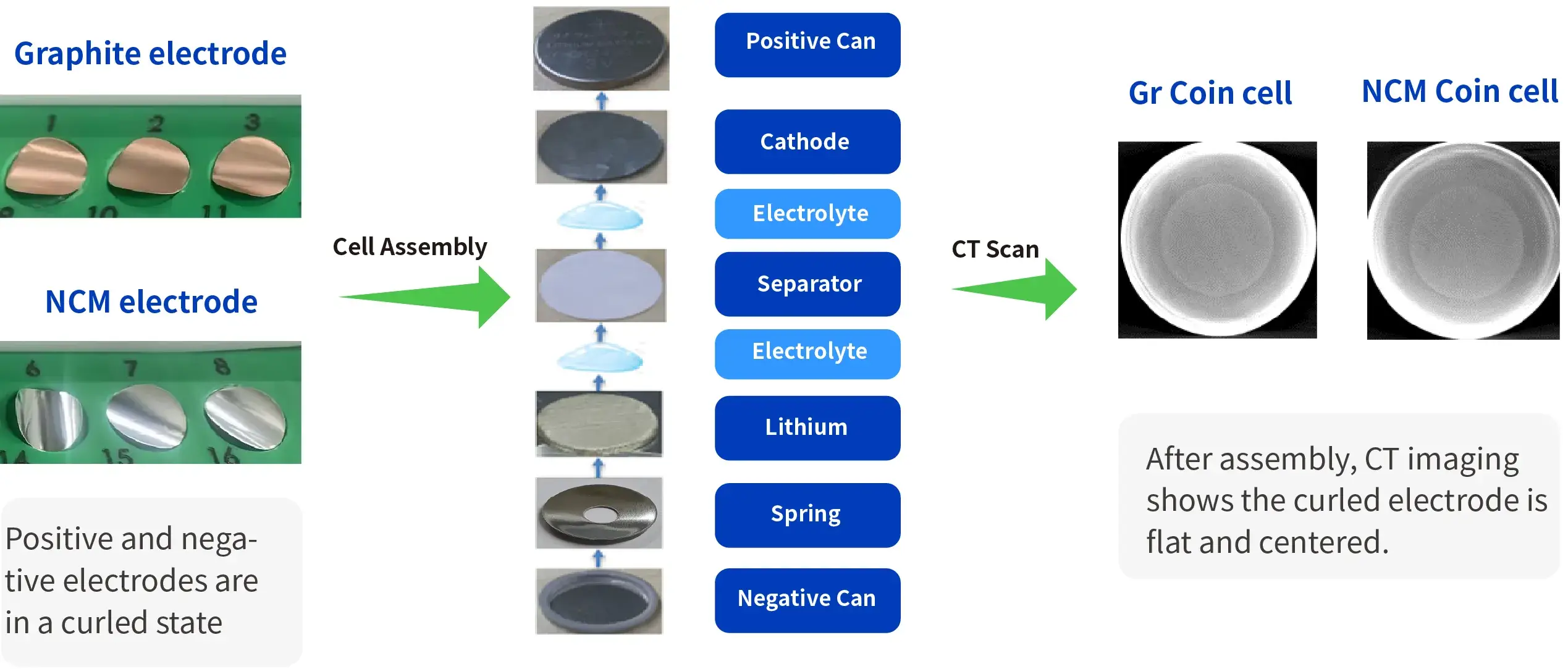
Precise gripping of curled electrodes achieves assembly concentricity within ±0.2mm.
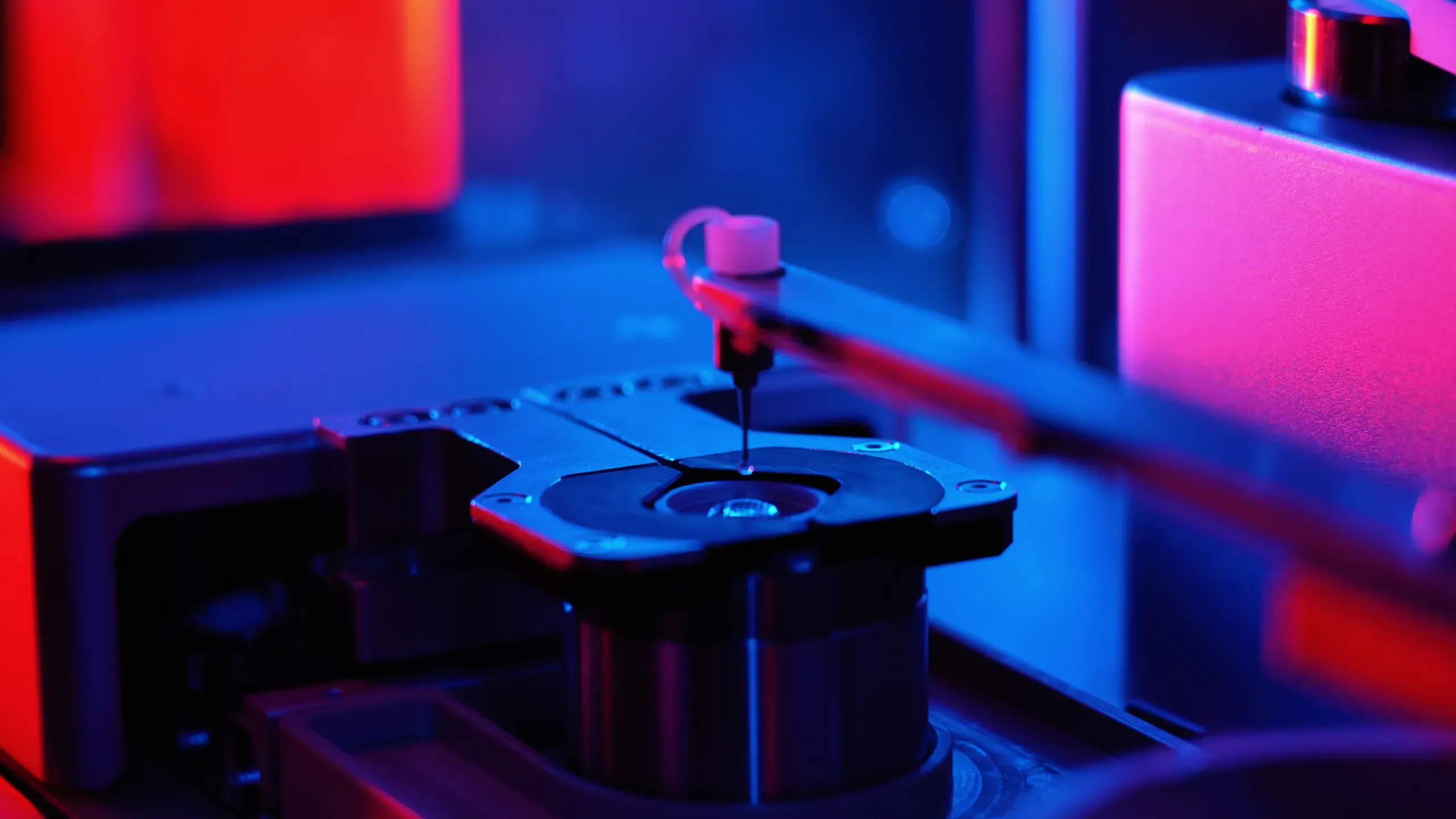
Electrolyte Automated Switching/Washing
Specialized fixtures for different material types, along with automated electrolyte switching and washing functions, effectively prevent cross-contamination.

Automatic Sealing Module
The sealing module ensures precise control over pressure and thickness, significantly improving sealing integrity.

Save Time With High Throughput Assembly
Equipped with a 200-unit material rack, CAAS supports high throughput rapid auto-assembly while minimizing repetitive mechanical operations.

Full-process intelligent Monitoring
A dual CCD vision system provides real-time monitoring of material status throughout the process, making battery data traceable and transparent.
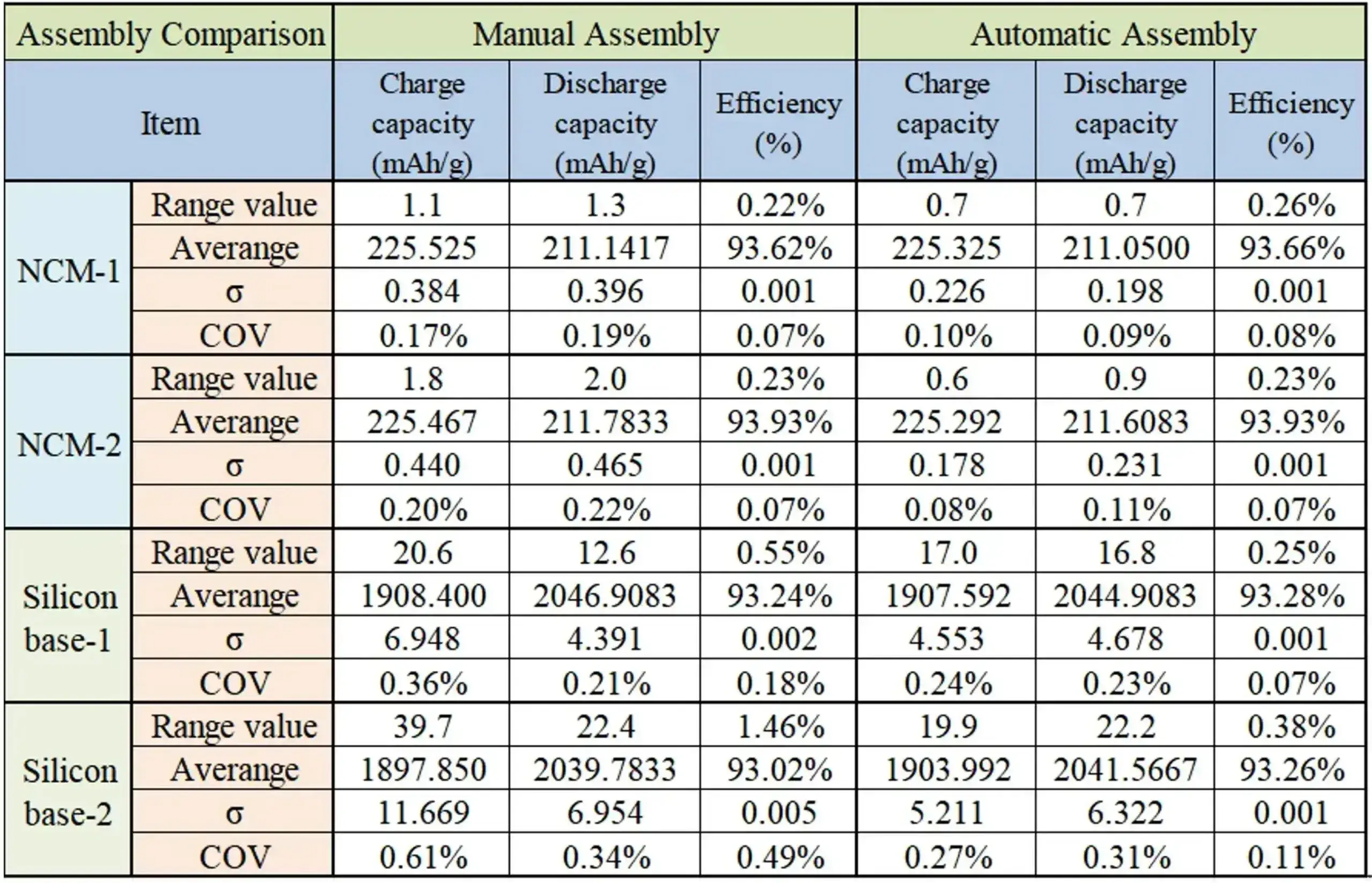
Reduce the Skill Threshold for Operators
The CAAS system significantly lowers the skill threshold for operators, allowing staff to master coin cell assembly without intensive training.
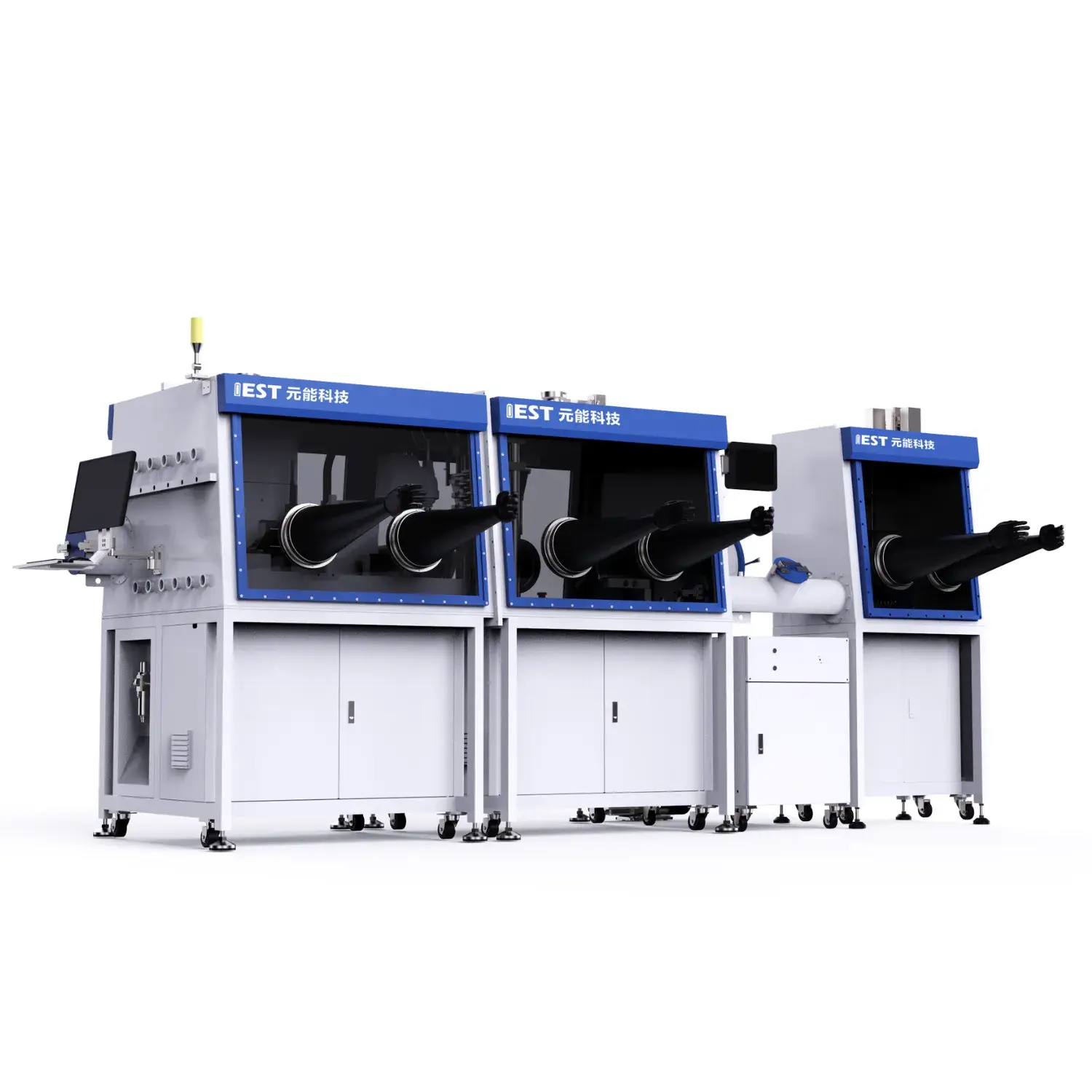
Glove Box Integration
Integrated glovebox provides controlled anhydrous/oxygen-free assembly atmosphere ensuring coin cell performance.
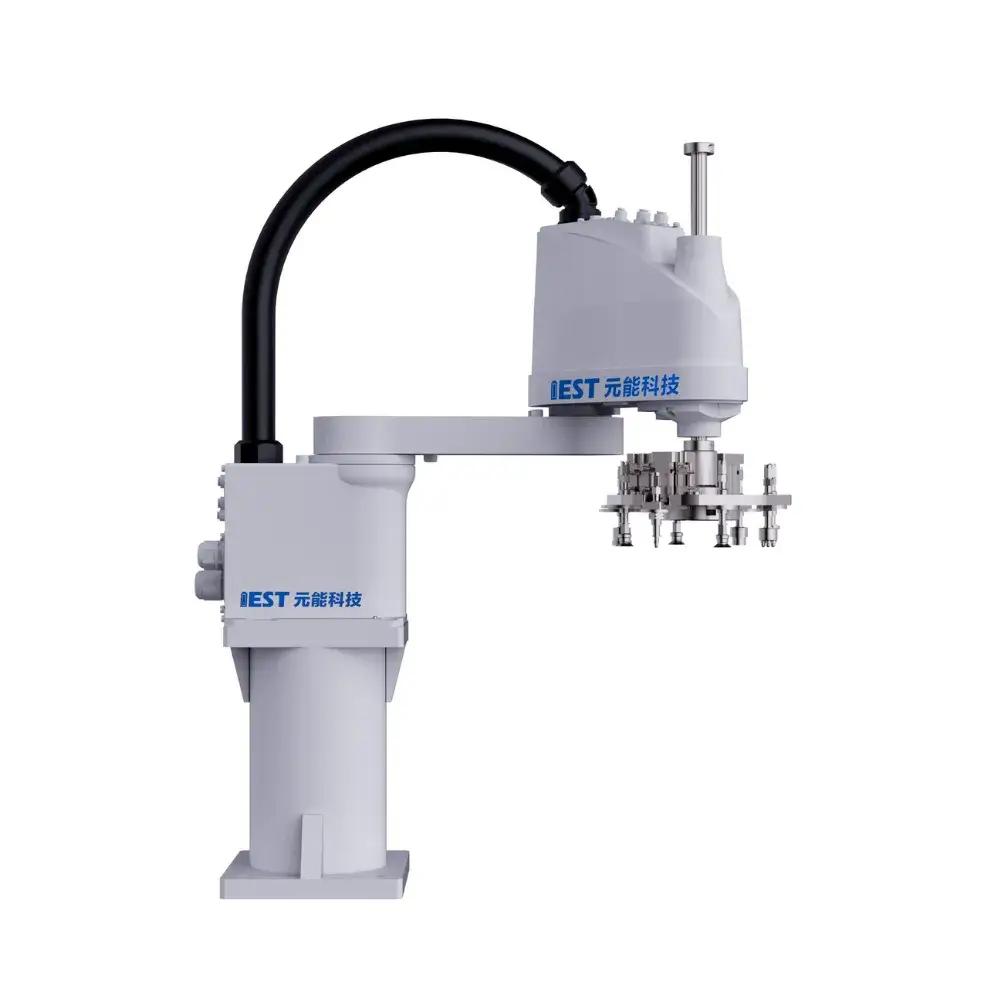
High-speed Robot Assembly
High-speed robotic material handling with optimized layout achieves ~1cell/min, enabling high-throughput coin cell assembly.
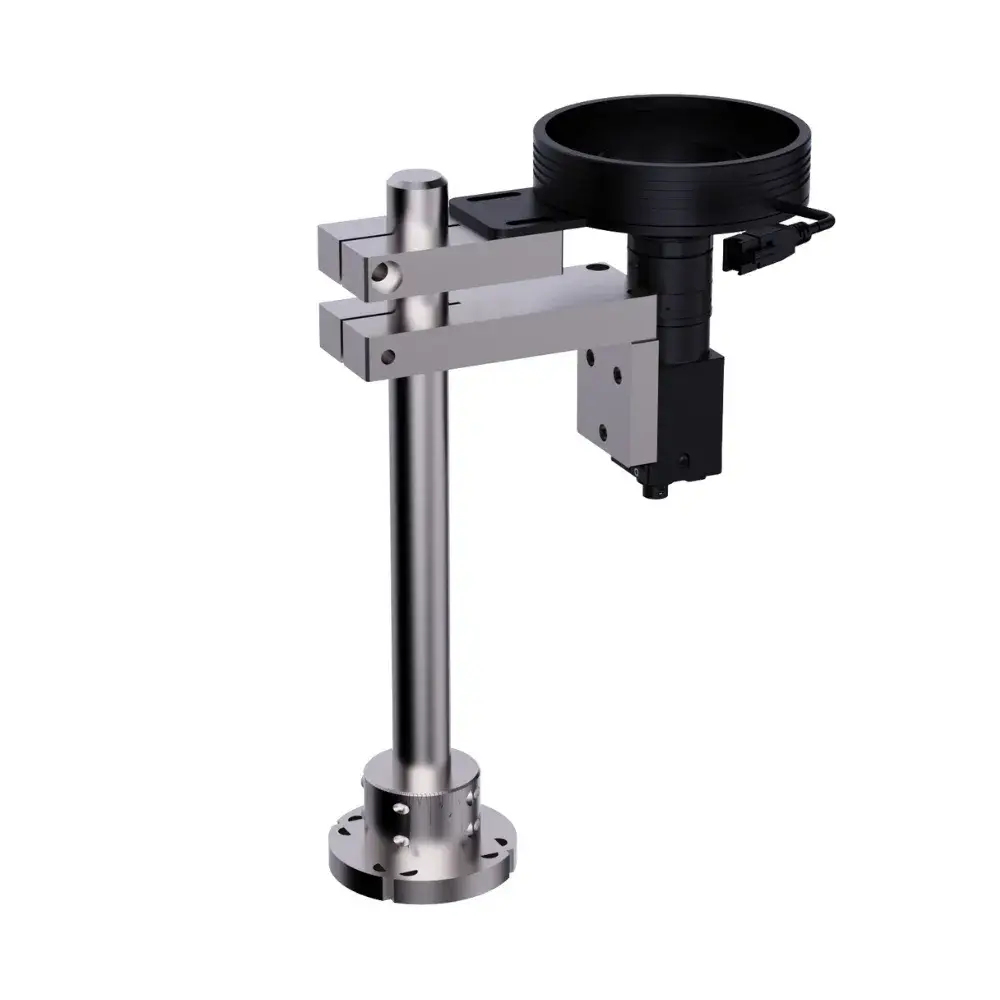
High-precision Assembly
±0.2mm concentricity tolerance guaranteed by precision positioning system for consistent coin cell stacking.

Cell Assembly Process Traceability
(Optional) Process traceability system with HD imaging and AI-based inspection for defect material rejection.
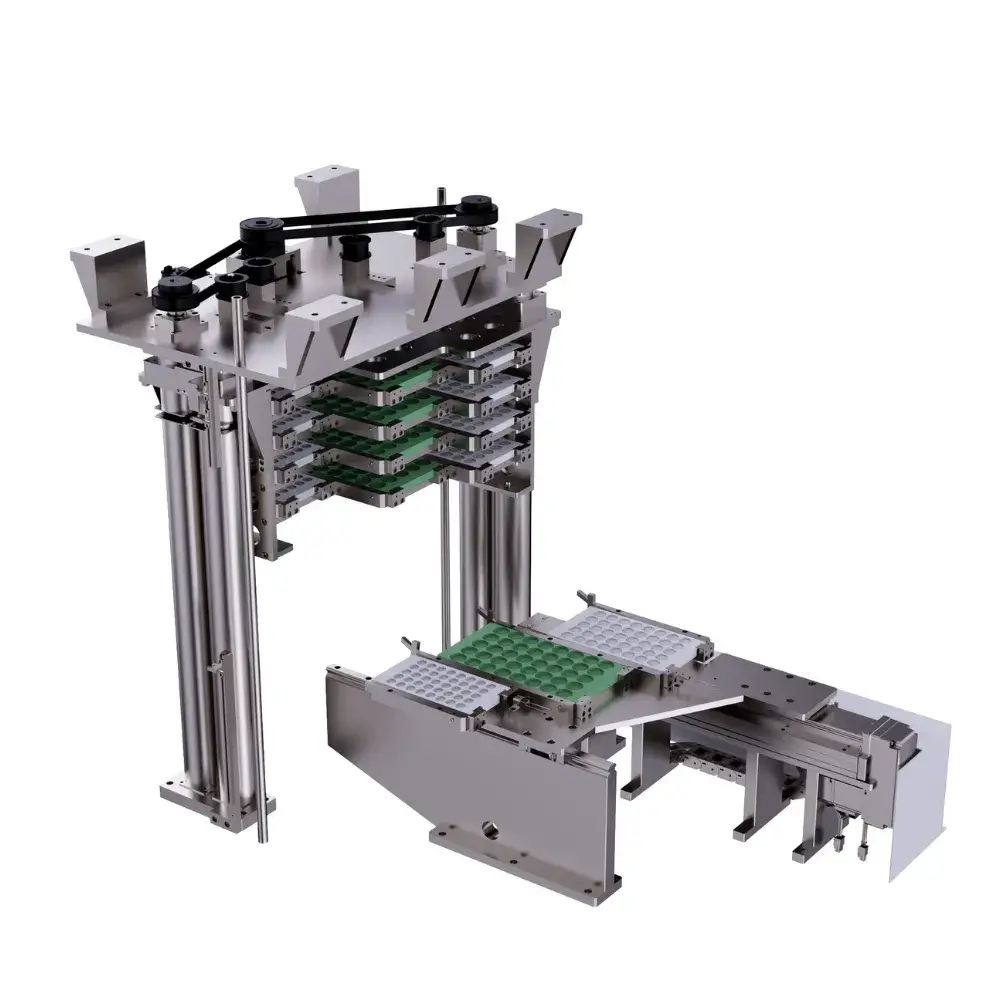
High-throughput Assembly
Batch loading capacity: 200 cells enabling continuous high-throughput assembly.
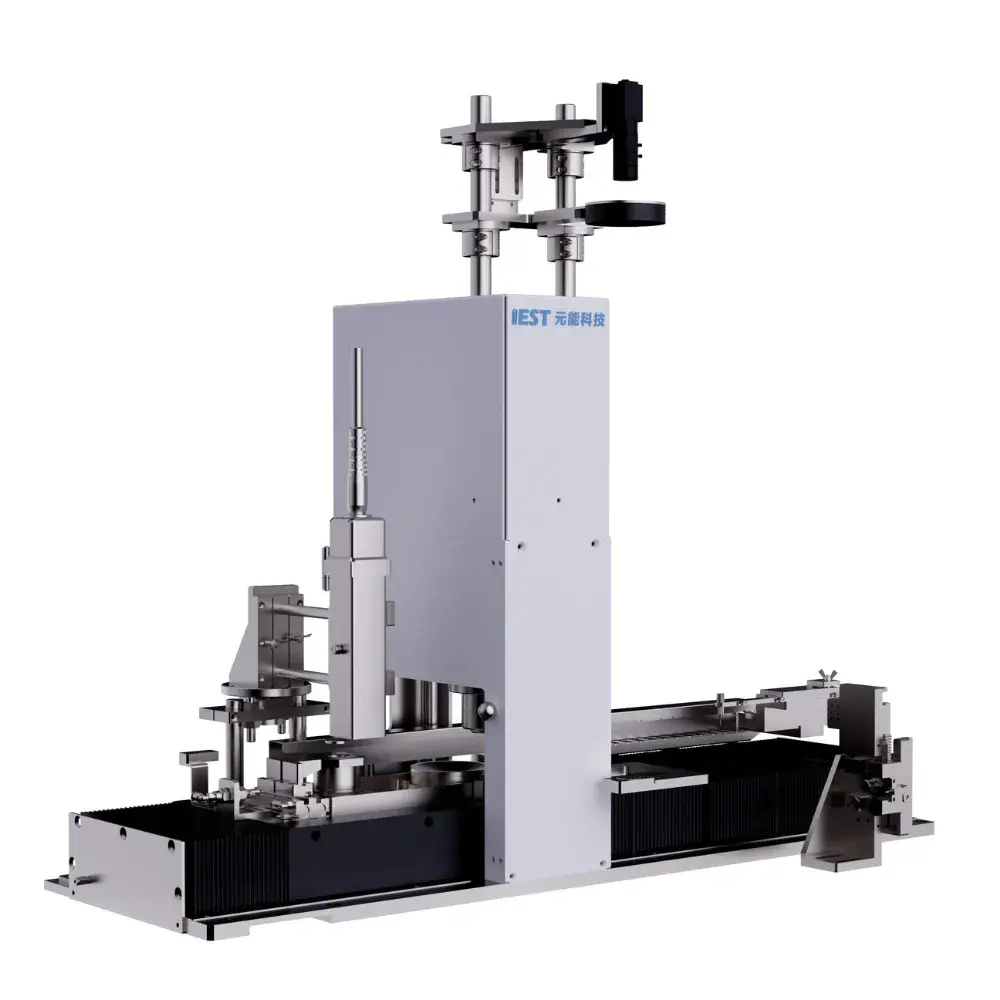
Batch Association
Electrode materials traceable via barcode scanning; In-chamber inkjet marking enables batch association.
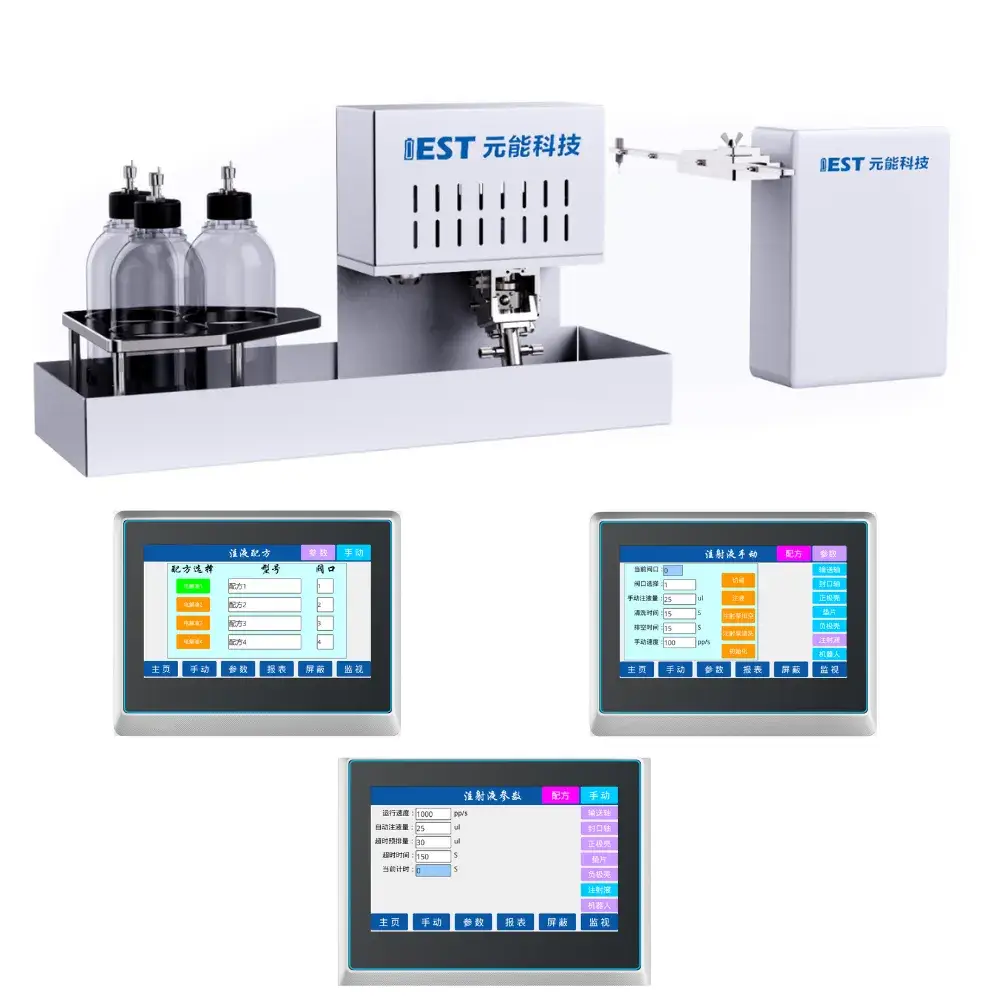
Auto Electrolyte Injection
Automated electrolyte injection with online switching between chemistries + inline system rinsing.
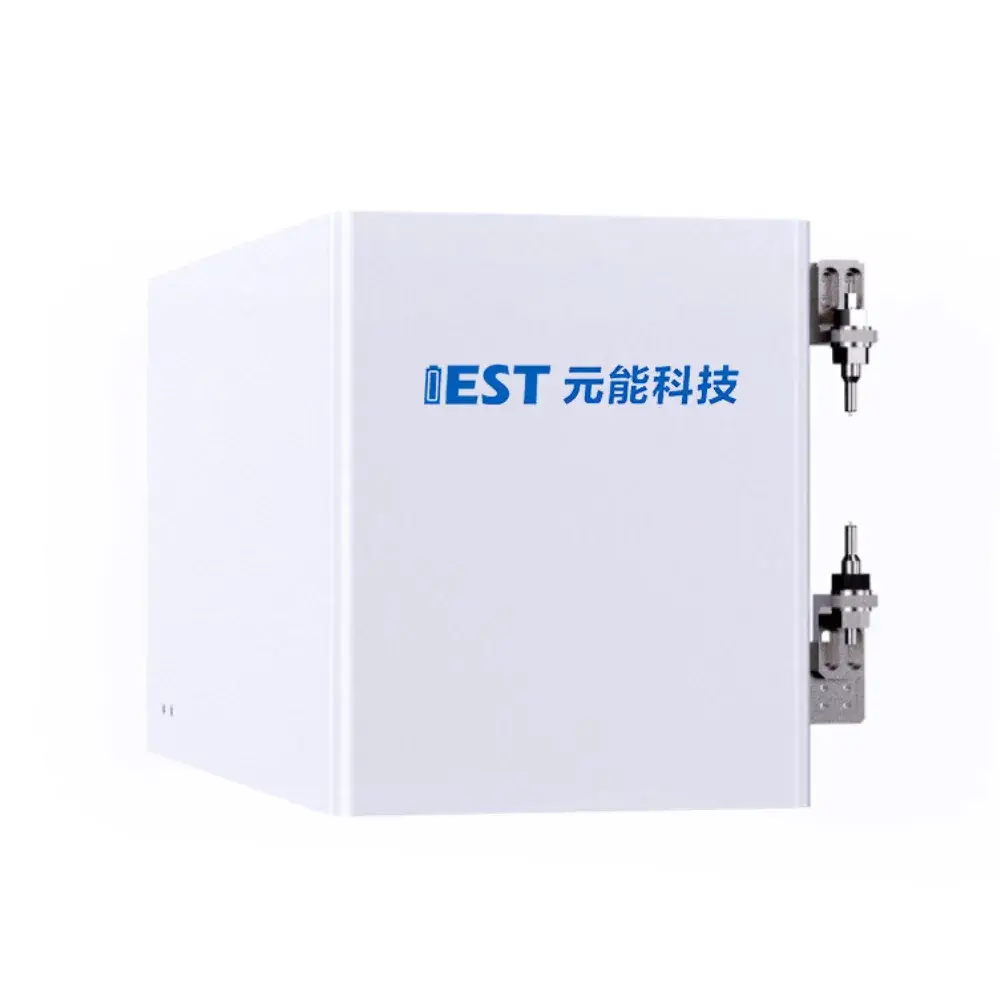
Online Voltage Test
Online OCV testing monitors cell survival rate and equipment stability.
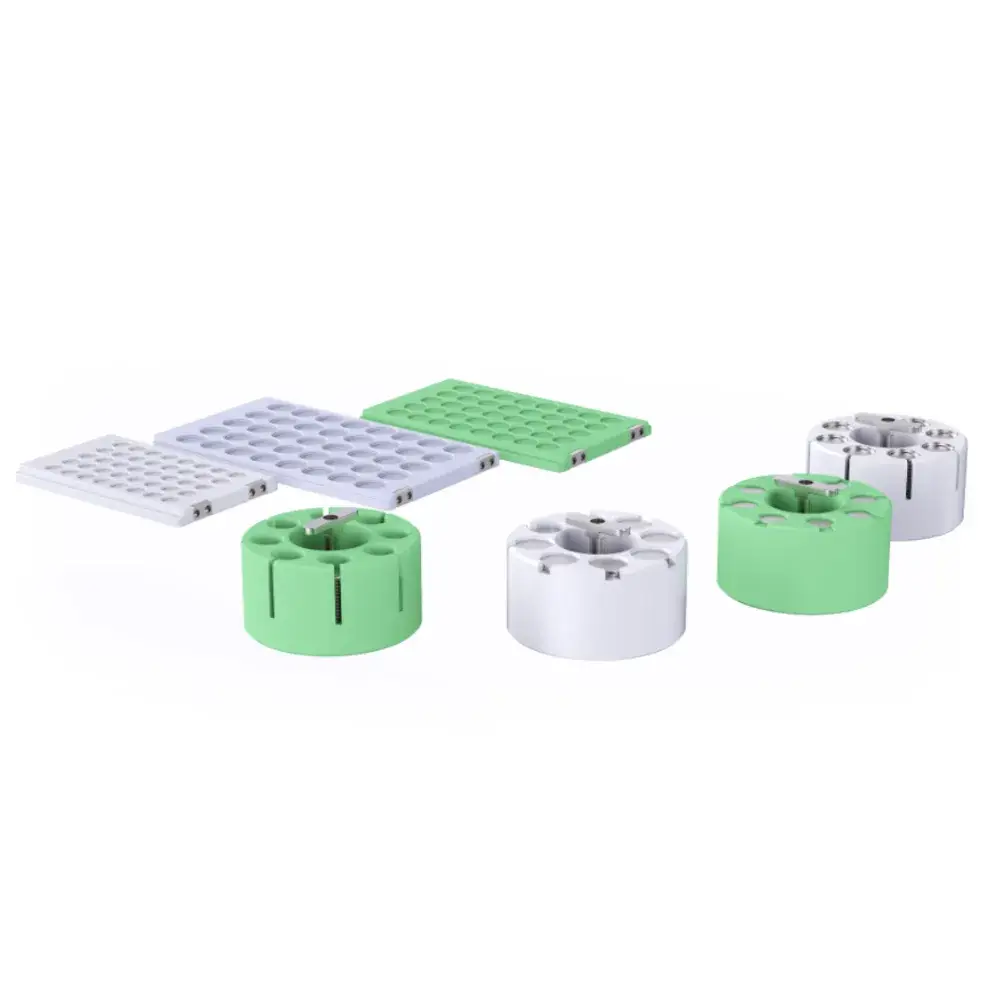
Material Tray Test
Centralized feeding system: Electrode/separator/lithium foil trays with material traceability.
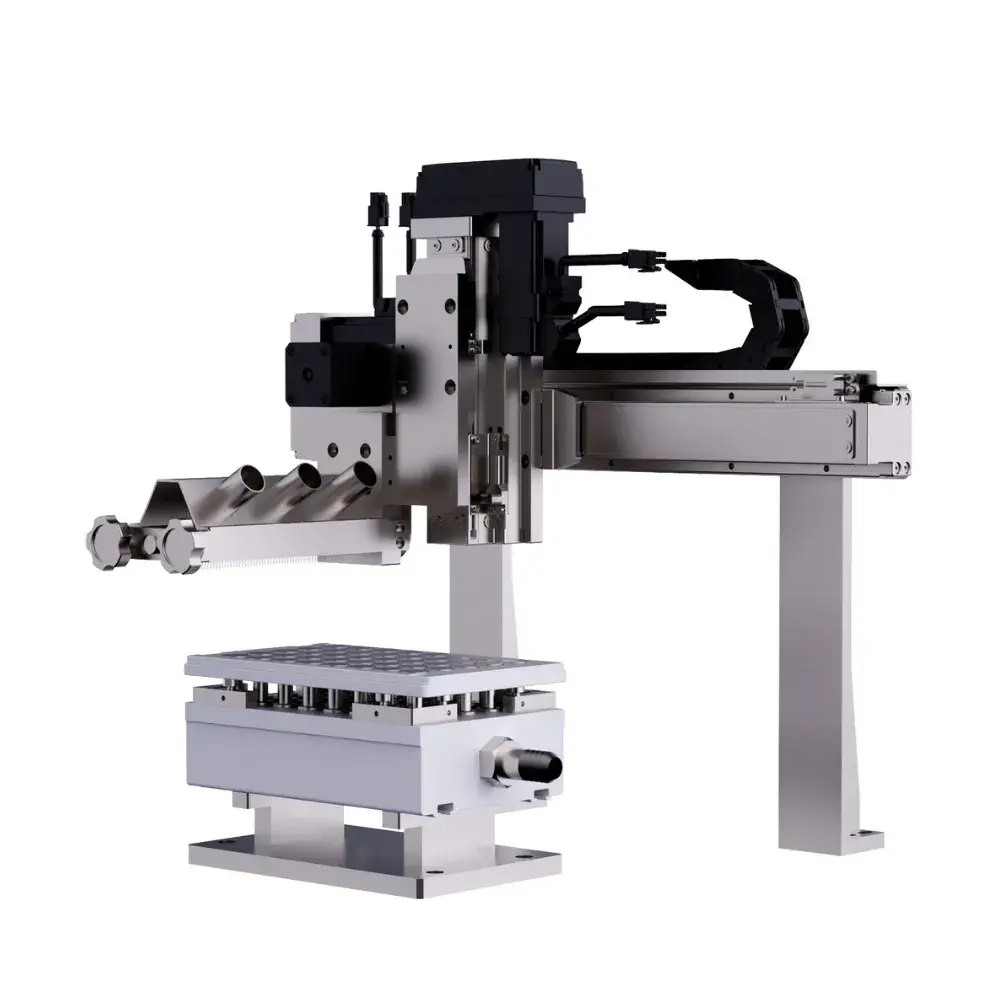
Automated Lithium Foil Brushing Function
(Optional) Automated lithium foil brushing module enhances surface quality and stacking uniformity.
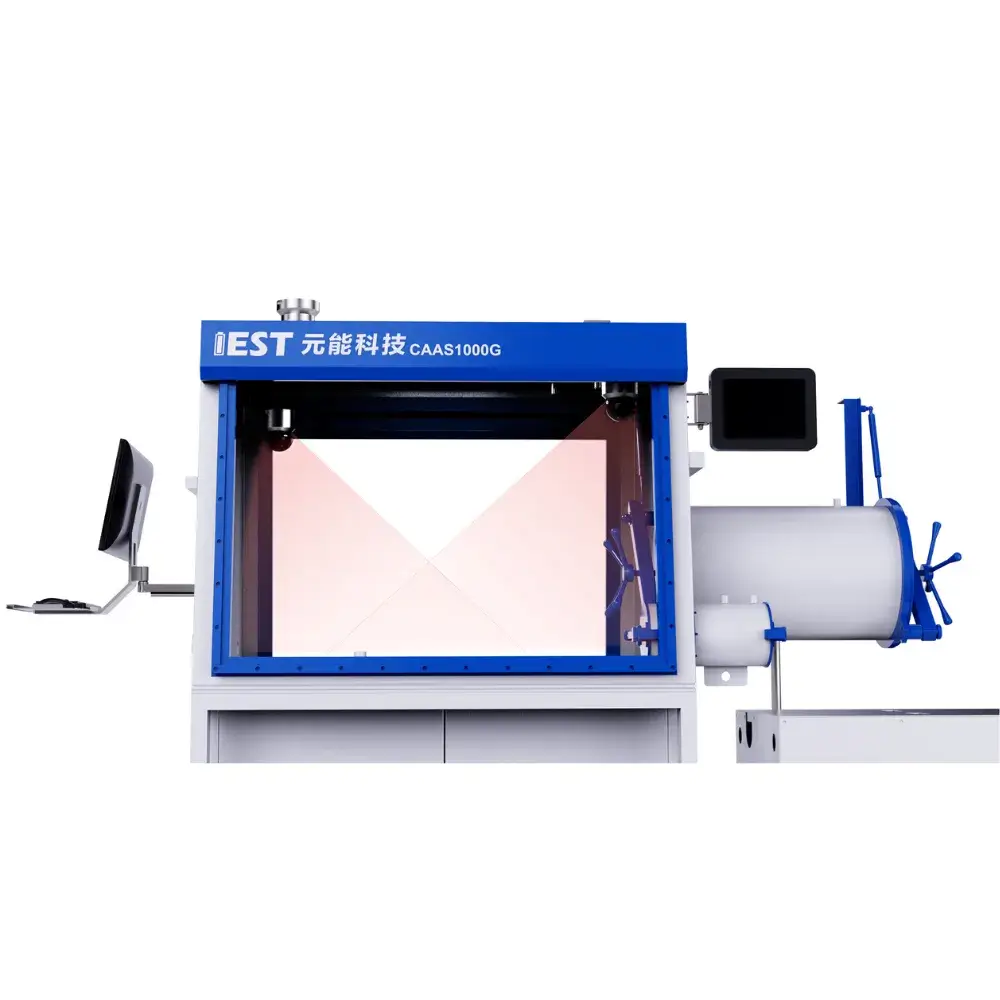
Sentinel Management
Top-mounted diagonal HD cameras enable real-time process monitoring and management.
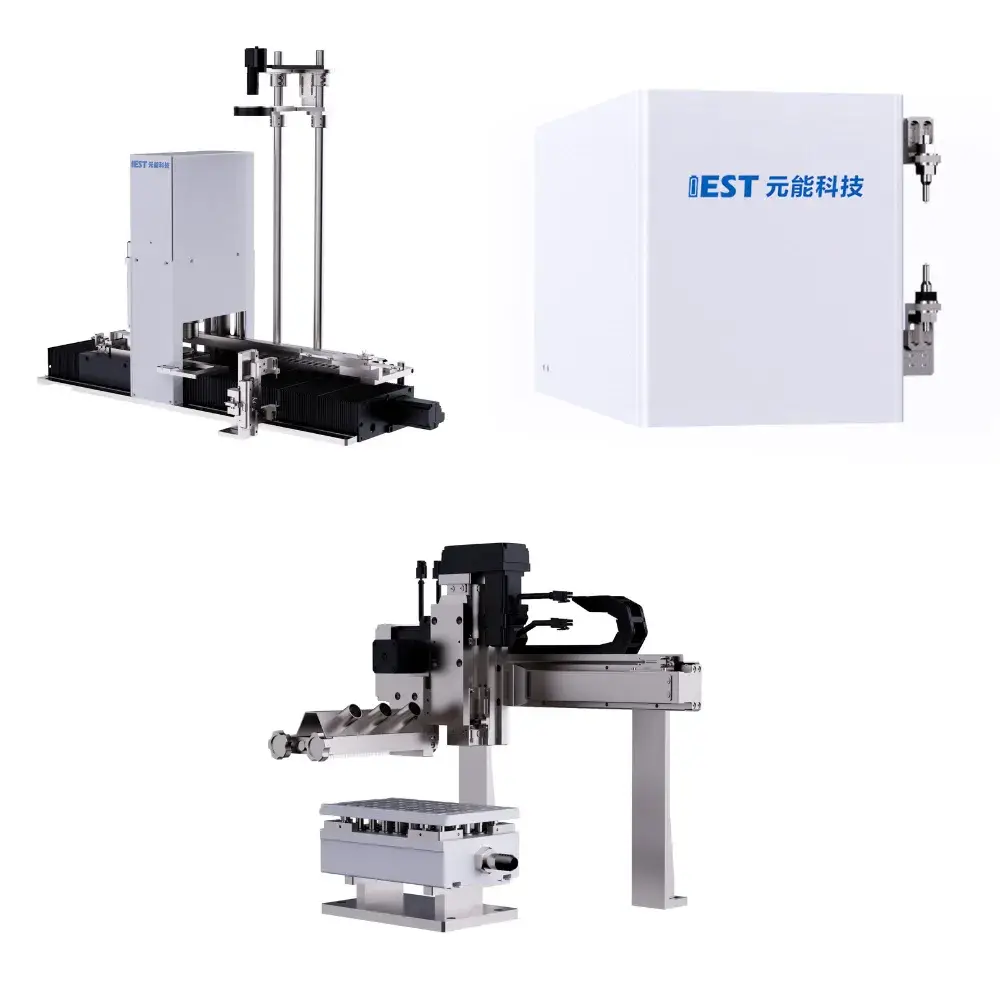
Functional Modularity
Modular architecture allows flexible configuration and providing customized services.
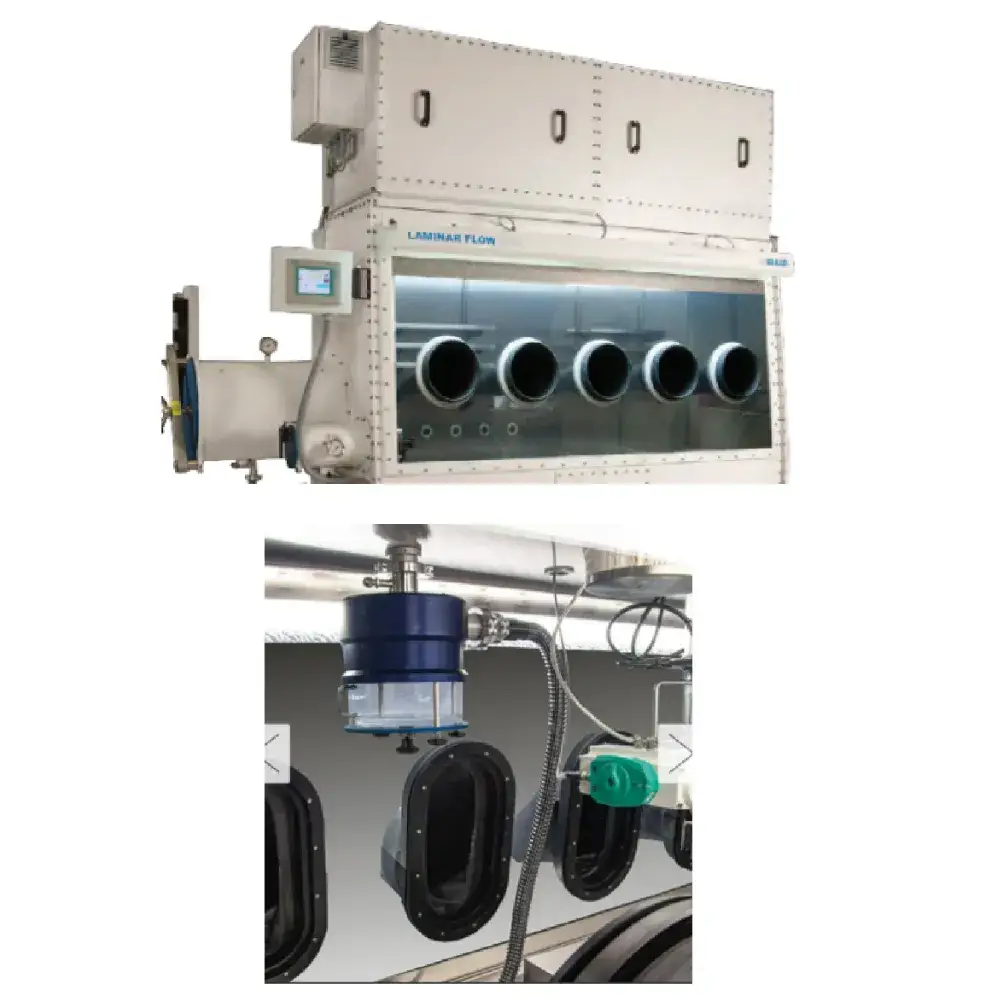
Particle Control
Glove box with dedicated dust removal, cleanroom-grade 4-axis robots, shielded drive components, non-metallic trays with material-specific vacuum grippers.
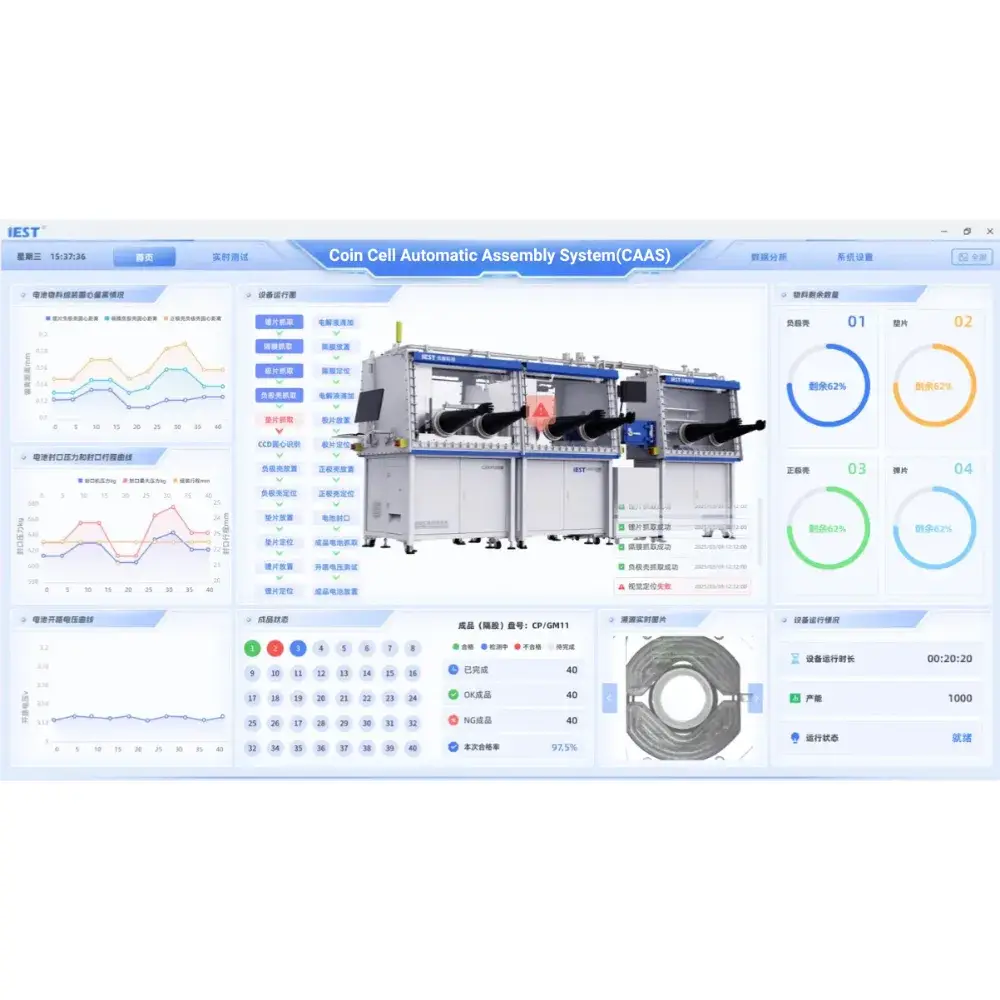
Data Process Software
Proprietary data management software automatically aggregates process parameters for user-friendly access and archiving.
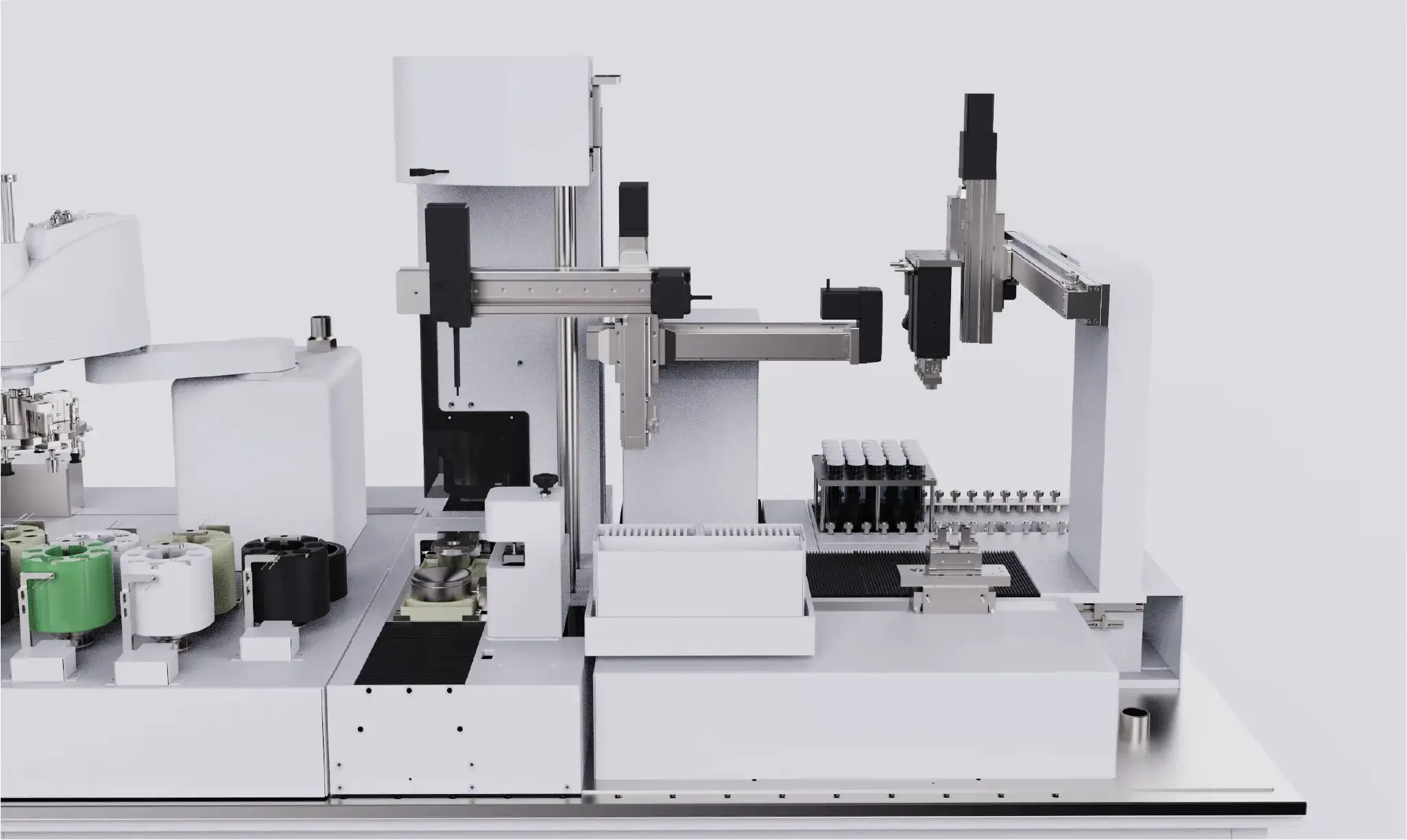
High-Throughput Automatic Electrolyte Switching System
- Equipment Features: Can interface with an automatic electrolyte formulation platform. Enables automatic switching between 100 different electrolyte recipes, supports continuous assembly of 400 battery cells.
- Application Scenario: Suitable for coin cell assembly for electrolyte formulation verification and high-throughput battery assembly.
Liquid Injection Module
- High-precision liquid injection with accuracy of ±1 μL. Injection volume continuously adjustable from 0 to 200 μL.
- Injection tips automatically switched to prevent cross-contamination of electrolytes.
- Automatic electrolyte transfer & short-term storage. Single transfer: 25 bottles (60 mL/bottle). Max capacity: 200 bottles.




| Model | CAAS1000M | CAAS1100M | CAAS1200M |
|---|---|---|---|
| Photo |

|

|
|
| Assembly Feature | 1~10ea | 40ea | 200ea |
| Assembly Accuracy | ±0.2mm | ||
| Assembly Efficiency | 1 ~ 1.5 cell/min | ||
| Function |
|
|
|
← Swipe to view more details →